
A large bottle of wine turns a table into an occasion, which is why magnums appear on so many Christmas and New Year tables. The names can be confusing, though: a jeroboam is not the same size in Champagne as it is in Bordeaux, and few people know how many glasses a big bottle really pours. This guide sets out the sizes, what each one is good for, and how to handle one at home without fuss.
The Standard Sizes At A Glance
The standard wine bottle holds 75cl. Everything larger is measured against it, and most of the large formats carry names borrowed from biblical kings and patriarchs. The volumes below follow the bottle size chart published by the English wine merchant Tanners, which matches the figures used across the trade.
| Name | Volume | Standard bottles |
|---|---|---|
| Magnum | 1.5 litres | 2 |
| Double magnum | 3 litres | 4 |
| Jeroboam (Champagne) | 3 litres | 4 |
| Jeroboam (still wine) | 4.5 litres | 6 |
| Rehoboam | 4.5 litres | 6 |
| Methuselah or Imperial | 6 litres | 8 |
| Salmanazar | 9 litres | 12 |
| Balthazar | 12 litres | 16 |
| Nebuchadnezzar | 15 litres | 20 |
| Melchior | 18 litres | 24 |
Tanners also offers a handy mnemonic for the order of the bigger sizes: “Joseph regularly made some bubbly nectar” (Jeroboam, Rehoboam, Methuselah, Salmanazar, Balthazar, Nebuchadnezzar).
Why The Names Change Between Champagne And Bordeaux
The main source of confusion is that Bordeaux uses its own names. In Bordeaux, the 3 litre bottle is called a double magnum, the 4.5 litre bottle is the jeroboam, and the 6 litre bottle is an Impériale. In Champagne, the jeroboam is the 3 litre bottle and the 4.5 litre one is the rehoboam.
So if a wine list or a shop description simply says “jeroboam”, look at the volume printed on the label before you assume anything. With sparkling wine it almost always means 3 litres; with a red Bordeaux it usually means 4.5 litres.
Does Wine Taste Different From A Big Bottle?
Many winemakers and collectors believe it does, especially over time. The reasoning comes down to oxygen. A magnum uses the same size cork and neck as a standard bottle, so each glass of wine inside shares a smaller amount of air in the neck and a smaller share of the oxygen that passes through the cork. Speaking to Decanter, Michel Drappier of Champagne Drappier said a magnum takes in about half as much oxygen as a standard bottle during disgorgement, the step where the yeast sediment is removed from Champagne. The result is wine that tends to develop more slowly.
That matters most for wines you plan to keep for years. For a bottle opened at a party within a few months of buying it, you are paying for the sense of occasion more than for any change in taste. That is a perfectly good reason, but it is worth knowing.
Which size makes sense when?
- Magnum (1.5 litres): the most practical large format. Widely available, manageable to pour, and suits a dinner for six to eight.
- Double magnum or Champagne jeroboam (3 litres): a showpiece for a bigger gathering, such as a family Christmas or a milestone birthday. It is too tall for most home fridges, so plan on an ice bath.
- Six litres and above: mostly bought for weddings, restaurants and events, or by collectors. Heavy and awkward to pour, and usually ordered through specialist merchants.
How Many Glasses Does A Large Bottle Pour?
A useful way to plan is by standard drinks. In Ireland a standard drink contains 10 grams of pure alcohol, and according to the HSE a small 100ml glass of wine at 12.5% is one standard drink, while a 75cl bottle is just over seven. That means:
- A magnum holds about 15 standard drinks, or ten 150ml glasses.
- A 3 litre bottle holds about 30 standard drinks, or twenty 150ml glasses.
These numbers are a good reality check. The HSE’s low-risk weekly guidelines are fewer than 11 standard drinks for women and fewer than 17 for men, spread over the week, with two to three alcohol-free days and no more than six standard drinks on any one occasion. A magnum is a bottle for a table of guests, not for two people over an evening. Pour smaller measures, put jugs of water and a few good alcohol-free options on the table, and make sure everyone has a safe way home.
Chilling, Opening And Pouring A Big Bottle
Large bottles need more time and a little more care than you might expect.
- Plan the chill. A magnum can often go into the fridge lying down (measure the shelf first); give it several hours. Anything bigger needs an ice bath. Wine writers at VinePair suggest a mix of roughly half ice and half water, about two hours for a large bottle of sparkling wine and around an hour and a half for white, turning the bottle by the neck every few minutes so it cools evenly.
- Leave reds out of the warmth. A big bottle of red takes a long time to change temperature, so do not store it next to the cooker or a radiator on the day.
- Stand old reds upright beforehand. If the wine has some age, stand the bottle up for a day or two so any sediment settles to the bottom.
- Open sparkling wine slowly. Keep a thumb on the cork, point the bottle away from people, and turn the bottle rather than the cork. A heavy bottle is harder to hold steady, so take your time and ease the cork out with a quiet sigh rather than a pop.
- Pour with two hands. Hold the base or the punt with one hand and support the shoulder with the other. Pour slowly, and fill glasses only about a third of the way, which also helps keep measures sensible.
Big bottles show off well in a broad-bowled glass. If you are setting a festive table, our range of champagne glasses includes both flutes and wider tulip shapes that work well with sparkling wine from any size of bottle.
What About Leftovers?
Once a large bottle is partly empty, the wine has a lot of air above it and starts to fade faster. Rather than re-corking a half-full magnum, decant the leftovers into a clean standard bottle or a smaller sealable container, close it and keep it in the fridge. Drink still wine within a few days. Our guide on how to store wine at home covers temperature, light and position for the bottles you have not opened yet.
Big Bottles As Decoration
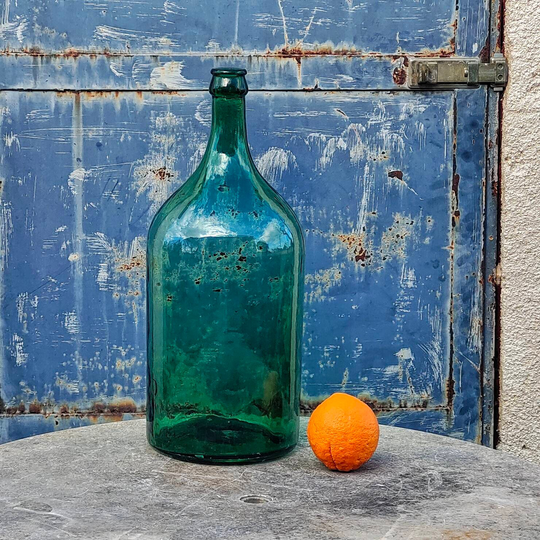
Not every large bottle is meant to be opened. Old glass demijohns, known in Italy as damigiane, were traditionally used to ferment, store and transport wine and oil, and they make striking pieces in a kitchen, hallway or bar corner. If you want the look of a large bottle of wine without the wine, a vintage Italian 17 litre wine bottle in green glass brings that rustic, Mediterranean feel. The listing gives a height of 63cm, so measure your shelf or floor space first, and remember that old glass is heavy and fragile: place it somewhere it will not be knocked.
Your Next Step
If you are thinking of a large bottle for Christmas or New Year, start with a magnum. Check that it fits your fridge lying down, count your guests, and plan for about ten glasses per bottle. Then order it in good time, as a plan made in November is far easier than a rushed search on Christmas Eve. Please enjoy wine responsibly.